吉林大学汽车工程学院 · 2026College of Automotive Engineering, Jilin University · 2026
2026课程实录2026 Course Archive
复杂系统工程Complex Systems Engineering
同学们从任务和使用环境出发,选择一个复杂系统,沿着系统生命周期的各个开发阶段完成研究、模型、分析与展示。
Starting from the mission and operational context, each student selects a complex system and develops its requirements, architecture, analysis, scenarios, verification, and presentation across the system life cycle.
- 学生Students
- 20
- 课程Class
- 24车辆(饶斌班)Class of 2024, Raobin Program
- 形式Format
- 讲解、个人研究、展示Lectures, individual study, presentations
01
课程结构Course Structure
八次课,沿一条完整的开发过程推进Eight sessions across a complete development process
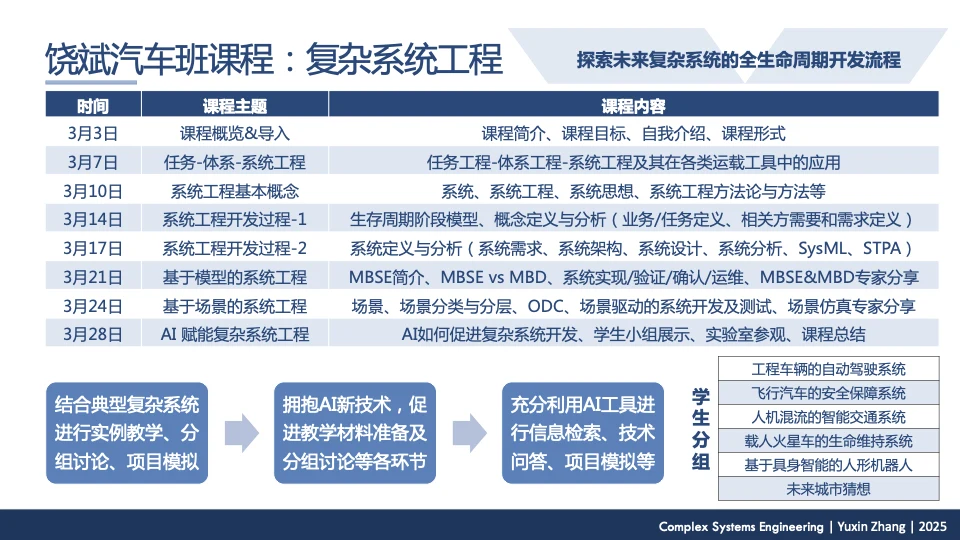
课程从复杂系统与系统工程基本概念开始,依次讨论任务、体系与系统,概念定义,系统需求与架构,MBSE,基于场景的系统工程,以及 AI 辅助的系统工程实践。
The course begins with complex systems and systems engineering fundamentals, then moves through mission, system-of-systems and system levels, concept definition, requirements and architecture, MBSE, scenario-based systems engineering, and AI-assisted practice.
每次课后,同学们把课堂方法用于同一个自选复杂系统。阶段作业逐步累积,最终形成一套前后衔接的课程作品。
After each session, students apply the methods to the same selected complex system. The assignments accumulate into a coherent final portfolio.
阅读上一轮课程介绍 →Read the previous course introduction →02
系统研究System Study
先看清系统所在的位置,再定义它如何工作Locate the system in its wider context, then define how it works
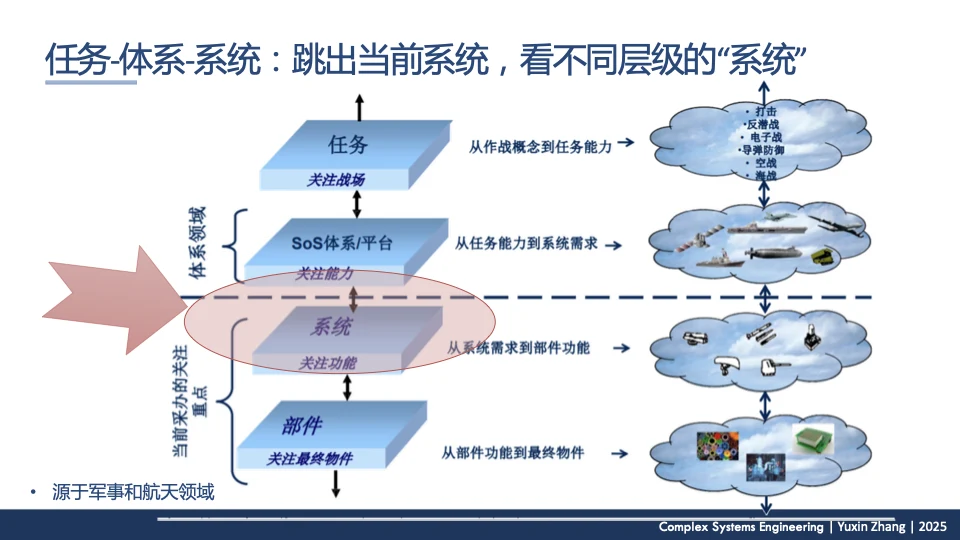
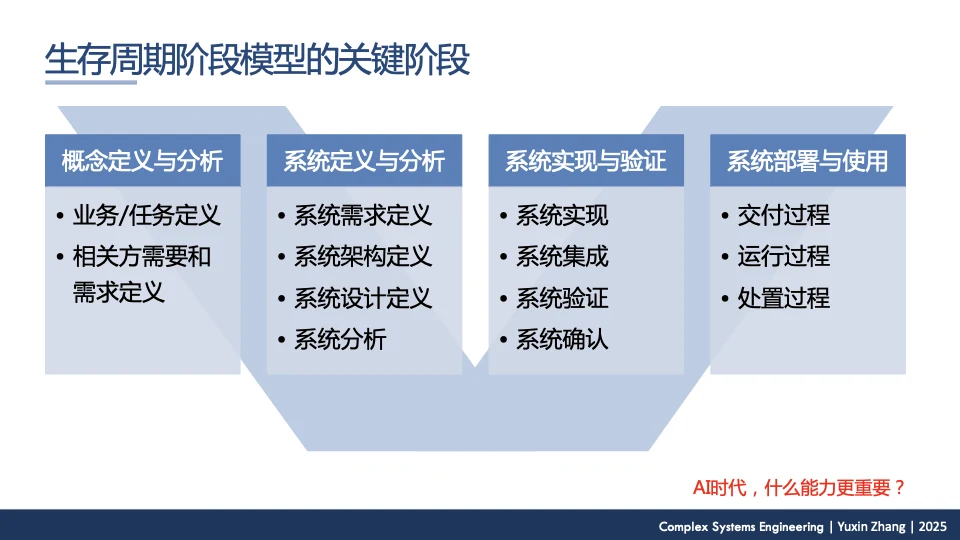
任务与使用情境Mission and context
利益相关方与概念定义Stakeholders and concept
系统需求与架构Requirements and architecture
安全、场景与验证Safety, scenarios, and verification
展示与证据归档Presentation and evidence
03
学生作品Student Portfolios
2026 学生作品页2026 Student Work
每位同学拥有独立页面。后续将在这里陆续放入阶段作业、系统模型、图表、展示材料和 AI 使用记录。
Each student has an individual project page for stage assignments, system models, diagrams, presentations, and AI-use records.
姓名 / 学号Name / Student ID
课程说明Course Notes
研究过程需要经得起回看The research process should stand up to review
AI 工具可以用于资料检索、需求梳理、建模、场景分析和文字整理。重要结论需核对标准、文献或原始资料,并记录工具、用途、提示词摘要、人工修改和未解决问题。
AI tools may support literature retrieval, requirements analysis, modeling, scenario analysis, and drafting. Important conclusions should be checked against standards, publications, or primary sources, with the tools, purpose, prompt summaries, human edits, and open questions recorded.
课程作品将发布在公开网页。涉及企业保密、个人隐私或未授权图片、数据和文档时,请先脱敏、替换或取得明确许可。
Course portfolios are published on public webpages. Company-confidential material, personal data, and unauthorized images, datasets, or documents must be anonymized, replaced, or explicitly cleared before publication.
页面配图来自张玉新《复杂系统工程:吉大汽车饶斌班课程开源》。Course images: Yuxin Zhang, “Complex Systems Engineering: Open Course Materials for the JLU Automotive Raobin Program.”